The Compaytence Brief
The High-Stakes Journey of De-Risking in Banking and Its Ripple Effect on Fintech
1. Why Banks Are De-Risking2. Implications for Payment Service Providers3. A Cascade of Challenges4. A Cascade of Challenges5. The Broader Impact on Fintech and E-commerce6. The Way Forward7. How Compaytence Helps Businesses Thrive in a De-Risking Era8. Our Approach: De-Risking, Simplified9. Why Choose Compaytence?10. The Compaytence Advantage: Your Gateway to Stability11. Compaytence WinsIn recent years, a seismic shift has been underway in the banking sector, as major financial institutions ar

- Why Banks Are De-Risking
- Implications for Payment Service Providers
- A Cascade of Challenges
- A Cascade of Challenges
- The Broader Impact on Fintech and E-commerce
- The Way Forward
- How Compaytence Helps Businesses Thrive in a De-Risking Era
- Our Approach: De-Risking, Simplified
- Why Choose Compaytence?
- The Compaytence Advantage: Your Gateway to Stability
- Compaytence Wins
In recent years, a seismic shift has been underway in the banking sector, as major financial institutions are accelerating efforts to "de-risk" their operations. This trend has sent ripples through the fintech and e-commerce payment ecosystems, with profound implications for payment service providers (PSPs) and the broader financial industry.
Why Banks Are De-Risking
Under mounting pressure to strengthen Anti-Money Laundering (AML) and Countering the Financing of Terrorism (CFT) compliance, banks have faced increased scrutiny from regulators. These measures aim to ensure the integrity of financial systems, requiring banks to know precisely where funds originate and that their clients’ practices are legitimate. For major players like Wells Fargo, even the slightest association with high-risk accounts—such as those of fintech payment firms like Stripe and PayPal—can pose a significant threat to their reputation.
The costs of AML and CFT compliance have skyrocketed. Monitoring millions of e-commerce transactions in real time is not only resource-intensive but also fraught with risks of oversight. Banks face a stark choice: invest heavily in sophisticated systems to mitigate risks or step back from business relationships with sectors prone to vulnerabilities. For some, the latter has become the preferred path. Wells Fargo’s recent decision to exit BIN (Bank Identification Number) sponsorship is a prominent example of this de-risking strategy.

Implications for Payment Service Providers
BIN sponsorship allows PSPs to issue payment cards and access card networks like Visa and Mastercard. With major banks pulling out, PSPs are left scrambling to find new partners. This creates a precarious situation for the payments ecosystem:
- Operational Disruptions: PSPs may face delays and interruptions as they secure new banking relationships. Transitioning BIN sponsorships involves regulatory approvals and technical integration, which can slow down operations.
- Increased Costs: Smaller financial institutions that step in to fill the gap often lack the scale and resources of their larger counterparts. PSPs may see higher fees and less favorable terms as these institutions offset their own risk.
- Risk Amplification: Smaller banks and financial institutions may not have robust AML and CFT frameworks in place. This creates a fertile ground for fraud and illicit activities to thrive, as fintech companies struggle to maintain the same level of compliance oversight.
A Cascade of Challenges
For PSPs, the consequences of this trend are far-reaching. The withdrawal of major banks forces these firms to turn to smaller, less-established institutions that might lack the infrastructure to manage complex compliance demands. This creates a paradox: in an effort to de-risk, the banking sector inadvertently increases systemic vulnerabilities.
Fintech firms, especially those catering to global e-commerce merchants, may face heightened scrutiny from regulators as they partner with less-regulated institutions. This could slow innovation and deter new entrants in the fintech space, further consolidating power among a few large firms that can afford the compliance overhead.
The Broader Impact on Fintech and E-commerce
The de-risking trend highlights the growing divide between traditional banking and fintech innovation. Banks’ cautious withdrawal from high-risk sectors underscores their prioritization of reputation over opportunity, leaving fintech companies in an uphill battle to maintain their momentum.
This shift also raises existential questions about the future of financial inclusion and innovation. Smaller PSPs may struggle to survive, and merchants reliant on these providers could face higher fees and limited services, potentially stifling the growth of e-commerce globally.

The Way Forward
To address these challenges, a coordinated response is needed:
- Regulatory Harmonization: Ensuring that smaller institutions stepping into the BIN sponsorship void adhere to robust AML and CFT standards.
- Partnership Models: Encouraging collaboration between fintech firms, regulators, and banks to create shared frameworks for risk management.
- Technology Investments: Leveraging AI and blockchain to enhance transaction transparency and reduce the burden of compliance for all parties involved.
As the fintech ecosystem grapples with the fallout of de-risking, stakeholders must strike a delicate balance between innovation and security. While major banks like Wells Fargo prioritize safeguarding their reputation, the unintended consequences of their actions may require the entire industry to rethink its approach to compliance and collaboration. The road ahead is fraught with challenges—but also ripe with opportunity for those who can navigate the complexities of this new financial landscape.
How Compaytence Helps Businesses Thrive in a De-Risking Era
In a financial landscape where de-risking is becoming the norm, businesses—especially in the fintech and e-commerce sectors—face growing challenges in maintaining critical relationships with banks and payment processors. The trend toward stricter AML (Anti-Money Laundering) and CFT (Countering the Financing of Terrorism) practices leaves merchants at risk of losing access to vital financial infrastructure. Enter Compaytence: your partner in ensuring your business remains resilient, compliant, and well-positioned for growth.
At Compaytence, we recognize that de-risking doesn’t have to mean exclusion. Instead, it’s an opportunity for businesses to enhance transparency and credibility. By proactively addressing the concerns of banks and payment processors, merchants can strengthen their relationships with financial institutions, paving the way for sustainable growth.
Our Approach: De-Risking, Simplified
Our mission is to empower businesses to adapt to this new era of financial scrutiny. We specialize in comprehensive solutions designed to minimize risk, build trust, and optimize operations. Here’s how we help:
##### 1\. Risk Assessments
We begin by evaluating your business’s risk profile. From transaction patterns to customer demographics, we identify areas of vulnerability that might trigger red flags with financial institutions. Our assessments provide actionable insights that help you align your operations with industry best practices.
##### 2\. Business Plans That Speak the Language of Banks
Financial institutions need assurance that their clients operate aboveboard. We craft customized business plans that highlight your company’s legitimacy and compliance measures, giving payment processors and banks confidence in your partnership.
##### 3\. Website and Operational Audits
Your website is often the first touchpoint for regulators, banks, and payment processors evaluating your business. Our audits focus on de-risking your online presence, ensuring your terms and conditions, privacy policies, and refund protocols adhere to global standards. We also optimize site content to demonstrate credibility and reduce perceived risk.
##### 4\. Document Optimization
Financial documents can make or break your relationship with a payment processor. From bank statements to proof of business activity, we ensure your documentation is clear, complete, and compliant with the latest requirements of financial institutions.

Why Choose Compaytence?
In a world where major banks like Wells Fargo are pulling out of BIN sponsorships and de-risking is reshaping the financial ecosystem, businesses need a partner that understands the nuances of compliance and risk management. With Compaytence by your side, you’ll benefit from:
- Proactive Solutions: Stay ahead of compliance requirements with tailored strategies.
- Industry Expertise: Leverage our deep understanding of fintech, e-commerce, and global payment systems.
- Cost-Effective Support: Optimize your operations without incurring unnecessary expenses or delays.
The Compaytence Advantage: Your Gateway to Stability
As the de-risking trend continues, merchants who fail to address potential vulnerabilities risk being excluded from critical payment networks. Compaytence ensures your business is not only compliant but optimized for long-term success. By proactively addressing risk factors, we help you secure the trust and support of banks and payment processors, enabling you to focus on what you do best: growing your business.
Take the Next Step Today Don’t let de-risking derail your business. Schedule a consultation with Compaytence and discover how we can help you build a more secure, compliant, and successful future. Visit our website or contact us to learn more about our tailored de-risking solutions.
Compaytence Wins
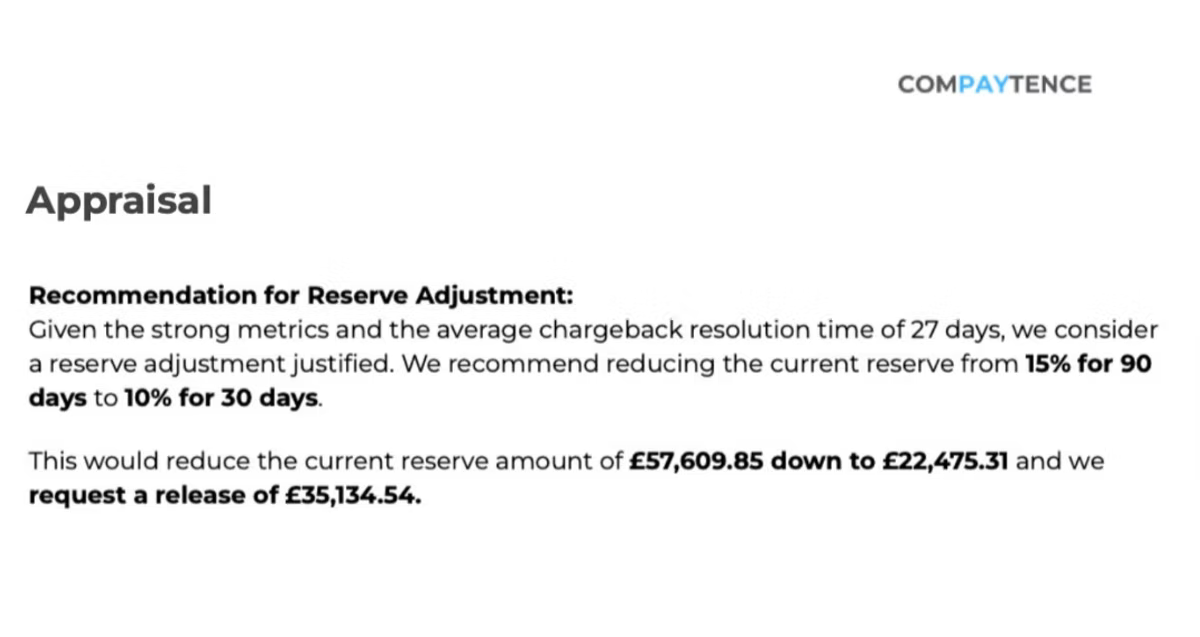
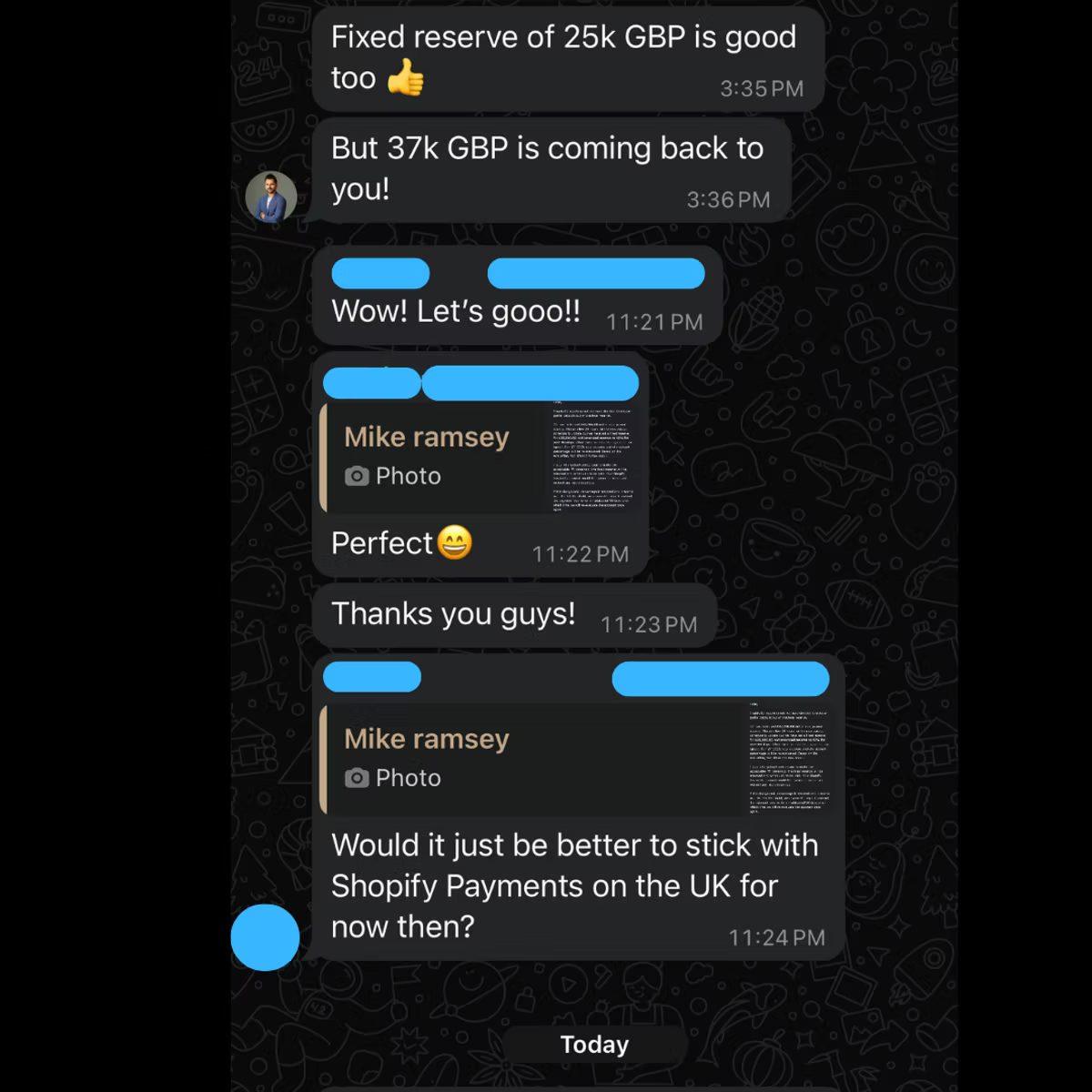
Here is a case study of one of our major clients that was dealing with a steep funding hold of almost £63,000 in Shopify. Our team quickly conducted a full risk assessment, identifying gaps in their documentation and compliance protocols.
We worked closely with the client to create a comprehensive business plan, optimized their website policies, and prepared a detailed transaction history report that aligned with Shopify’s compliance standards. Within two weeks, Shopify released £37,000 of the reserve hold, and the client resumed operations without further disruptions.
At Compaytence, we don’t just solve problems—we build trust with financial partners to keep your business moving forward.