The Compaytence Brief
Mastercard’s 2026 SMMP Update: What Merchants Are Missing
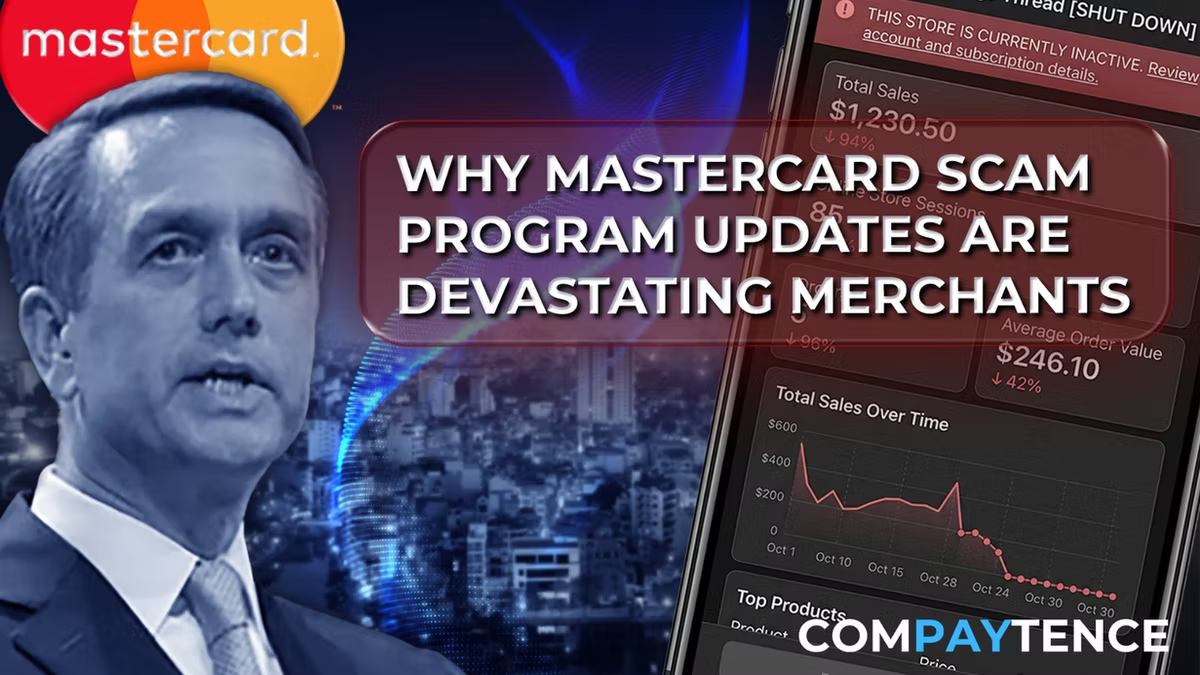
Starting in July 2026, Mastercard’s new Scam Merchant Monitoring Program (SMMP) will place far greater pressure on merchants, ISOs, PayFacs, and acquiring banks to identify scam-related activity before it escalates into widespread losses. Businesses that fail to understand these changes could face reserve increases, funding holds, enhanced underwriting reviews, or even sudden account termination with little warning.And unlike traditional fraud programs, SMMP is not centered around stolen cards o
Skip to Main Content
Starting in July 2026, Mastercard’s new Scam Merchant Monitoring Program (SMMP) will place far greater pressure on merchants, ISOs, PayFacs, and acquiring banks to identify scam-related activity before it escalates into widespread losses. Businesses that fail to understand these changes could face reserve increases, funding holds, enhanced underwriting reviews, or even sudden account termination with little warning.
And unlike traditional fraud programs, SMMP is not centered around stolen cards or unauthorized transactions.
It instead focuses on transactions that were technically approved by the cardholder, but later tied to deceptive or misleading business practices.
Behind Mastercard’s Crackdown
For years, payment monitoring mostly revolved around chargeback ratios and fraud thresholds. Mastercard is now paying closer attention to the merchant experience itself, specifically whether customers feel misled during the buying process.
The concern is that modern scam activity often hides behind legitimate-looking businesses and authorized transactions. Examples include:
- misleading subscription offers
- deceptive social media advertising
- fake investment or coaching opportunities
In many cases, customers willingly complete the purchase. The dispute comes later, once expectations are not met or billing terms become unclear.
That puts greater attention on how merchants advertise, disclose, fulfill, and support their products.
Who is Feeling the Pressure
New merchants, subscription businesses, card-not-present sellers, and aggressively marketed online offers are expected to receive the closest scrutiny under the updated environment.
Processors and acquiring banks are increasingly evaluating whether a merchant’s business model creates confusion, excessive complaints or unusual refund behavior, even before formal thresholds are crossed.
A merchant can have strong sales and still create concern if billing descriptors are unclear or cancellation policies are difficult to find.
The result is a much shorter runway for merchants that operate carelessly or scale too aggressively.

Where Merchants Get Into Trouble
One of the biggest misconceptions surrounding monitoring programs is that they only target intentional bad actors.
In reality, many legitimate businesses trigger reviews because their customer journey resembles patterns commonly associated with scam activity. Common triggers include:
- exaggerated marketing claims
- confusing checkout flows
- poor post-sale communication
Even a sudden spike in complaints tied to a new traffic source can attract attention quickly. Some merchants may also receive formal risk or compliance notifications from their acquiring bank during an investigation process, sometimes referred to in the industry as “GRIP letters.” While separate from the SMMP itself, these notices are often connected to broader fraud-monitoring reviews and should be treated seriously.
Once a processor begins requesting fulfillment records, customer communication logs, or proof of marketing disclosures, the account is already under elevated review.
Mastercard’s Message to the Industry
The underlying message behind the 2026 SMMP update is that payment networks want more accountability across the entire transaction ecosystem.
That includes merchants, affiliate marketers, lead generators, and traffic sources connected to the customer acquisition process.
Businesses that prioritize transparency and operational consistency will be in the strongest position moving forward.
Merchants should be reviewing:
- refund policies and subscription disclosures
- customer support accessibility and advertising practices
Because in 2026, good processing history alone may not be enough.
Merchants will also need to demonstrate that customers fully understood what they signed up for in the first place.
Close