The Compaytence Brief
AI and the 1-Man Marketing Machine
The One-Man PowerhouseAt one point, every business was a start-up. Some ascended to astronomical revenue quickly, others simmered for years before seeing any growth. But all of them had to invest money in human resources to generate income. Until now. Discussed in a recent article by The New York Times, entrepreneur Matthew Gallagher created his own telehealth provider, Medvi, offering weight loss pills to consumers. He identified a critical global issue and capitalized on his knowledge of AI p
Skip to Main Content
The One-Man Powerhouse
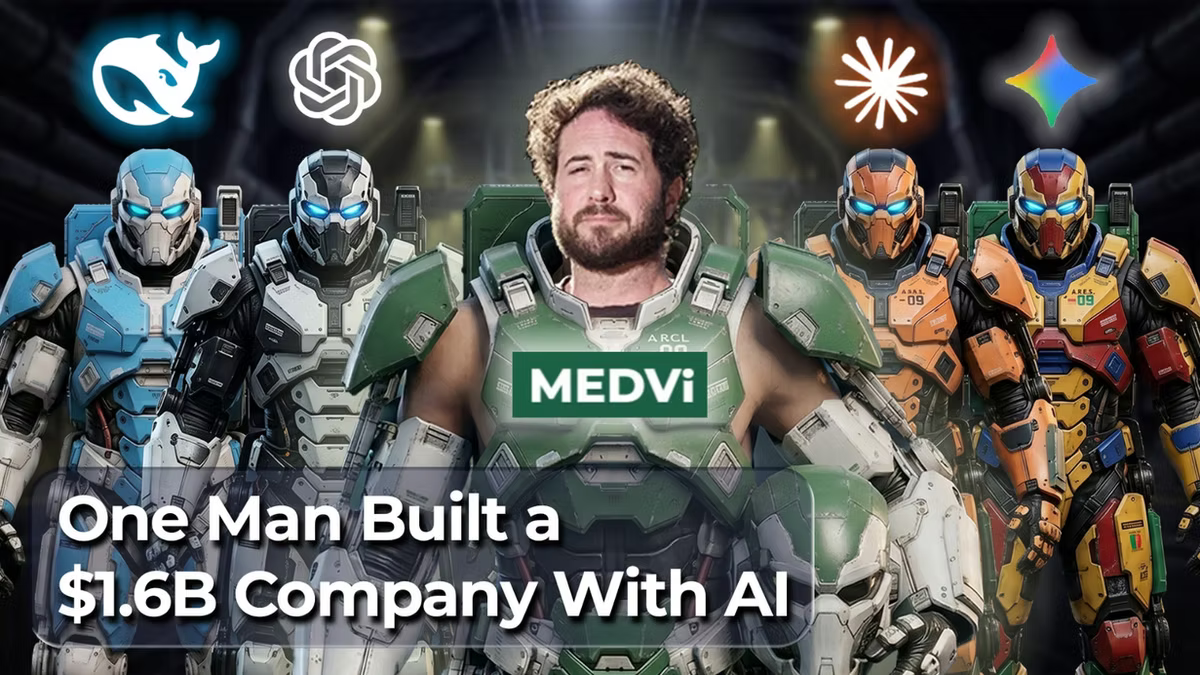
At one point, every business was a start-up. Some ascended to astronomical revenue quickly, others simmered for years before seeing any growth. But all of them had to invest money in human resources to generate income. Until now. Discussed in a recent article by The New York Times, entrepreneur Matthew Gallagher created his own telehealth provider, Medvi, offering weight loss pills to consumers. He identified a critical global issue and capitalized on his knowledge of AI programming to market his new product. Just $20,000 up front to get off the ground. Beyond that, he used AI to create outreach technology and even a customer service bot of his voice answering any necessary consumer questions.
In many ways, this mirrors Tony Stark deploying his “Iron Legion”— a fleet of autonomous suits acting in coordination, each handling a different task with precision, replacing what would otherwise require an entire team of human operators.
The Blueprint
What makes this model so disruptive isn’t just the low startup cost. It’s the collapse of traditional operational barriers. Tasks that once required entire departments; ad testing, customer support and data analysis can now be handled by a single individual leveraging the right AI tool. The “one-man marketing machine” is a repeatable blueprint. For existing merchants, the implications are immediate. AI not only reduces overhead, but also compounds output. Email campaigns can be personalized at scale. Landing pages can be generated, tested, and optimized continuously without relying on designers or developers. The result is speed, often the determinant in who captures demand first. Customer interaction is another area being fundamentally reshaped. Gallagher’s use of a voice-based AI support system highlights a shift toward personalized automation. Instead of generic chatbots, brands can now deploy assistants that reflect their tone, values and even personality. This creates a paradox: businesses can feel more human while relying less on labor.

For consumers, the experience becomes seamless. Questions answered instantly, concerns addressed without friction, and availability that never sleeps. For future entrepreneurs, the barrier to entry has never been lower, but the bar for execution has never been higher. When everyone has access to the same tools, differentiation shifts from resources to strategy. The winners won’t be those who simply use AI, but those who know how to orchestrate it by identifying profitable niches, crafting compelling offers, and building systems that learn and adapt over time.
Merchants, Listen Up!
However, this model isn’t without its challenges. Platform dependence, compliance issues, and maintaining trust in an increasingly automated environment all require careful navigation. Consumers are becoming more aware of AI-generated interactions, and authenticity still matters. The most effective operators will blend automation with human oversight, ensuring that efficiency doesn’t come at the cost of credibility. Ultimately, the rise of the one-man marketing machine signals a broader shift in commerce. The question is no longer whether you can afford to start a business. It’s whether you can compete with individuals operating at the scale of teams. For those willing to adapt, AI offers leverage unlike anything seen before. Not just a tool, but a multiplier, turning ambition into execution at a pace that was once impossible.
Close